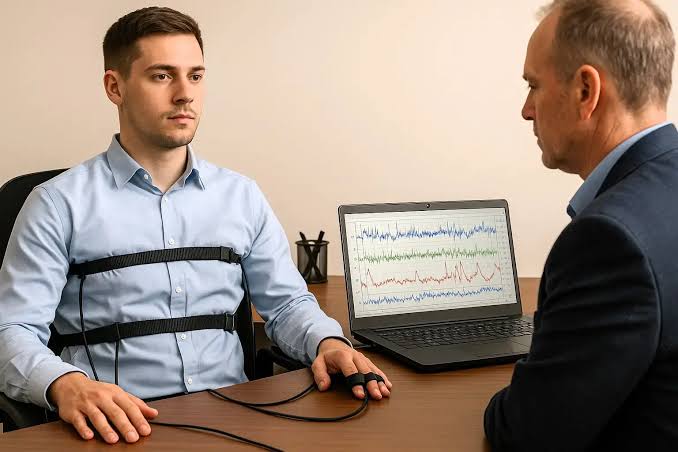
A polygraph test, commonly called a lie detector test, is a procedure designed to measure physical changes in the body while a person answers a series of questions. The idea behind the test is simple: when someone lies, their body may react differently than when they tell the truth. These reactions—such as changes in breathing, heart rate, blood pressure, and perspiration—are recorded and analyzed by a trained examiner. Despite its popular image in movies and crime shows, a polygraph does not directly detect lies. Instead, it measures stress-related physiological responses that may suggest deception. Because nervousness, fear, or anxiety can also trigger similar reactions, polygraph testing remains controversial among scientists, legal experts, and psychologists.
Understanding the Meaning of a Polygraph Test
The word polygraph comes from Greek roots meaning “many writings,” referring to the machine’s ability to record multiple bodily signals at the same time. During a typical examination, sensors are attached to the person’s body to track several physiological indicators. A blood pressure cuff monitors cardiovascular activity, elastic bands around the chest and abdomen measure breathing patterns, and small sensors on the fingers record skin conductivity, which changes when sweat gland activity increases. Modern systems often use digital software rather than paper charts, but the principle remains the same: monitor physical responses while the examinee answers carefully structured questions.
A polygraph test is usually used as an investigative tool rather than as definitive proof of honesty or dishonesty. Law enforcement agencies may use it during criminal investigations, private organizations may use it in certain internal cases, and some government agencies rely on it for security screening. However, many courts do not accept polygraph results as evidence because of concerns about reliability and interpretation.
How Does a Polygraph Test Work?
A polygraph examination generally consists of three main stages: the pre-test interview, the testing phase, and the analysis phase. Each stage plays a major role in the overall process.
During the pre-test interview, the examiner explains how the test works and reviews all questions in advance. This stage is important because the examiner ensures the subject understands every question and agrees to answer clearly with “yes” or “no” responses. This interview can also help establish a baseline of normal physiological reactions.
The second stage is the actual testing phase. The subject is connected to the sensors and asked a series of questions. These questions typically include neutral questions, control questions, and relevant questions. Neutral questions are simple facts, such as “Is your name John?” Control questions are designed to provoke mild stress, while relevant questions directly relate to the matter under investigation.
Finally, during the analysis phase, the examiner reviews the recorded physiological data. Significant spikes or changes in bodily responses during specific questions may be interpreted as signs of deception. However, interpretation depends heavily on examiner skill and methodology, which is one reason polygraph testing remains debated.
What Does a Polygraph Measure?
A polygraph test does not read thoughts or identify lies directly. Instead, it measures physiological signals associated with emotional stress. These commonly include:
- Heart Rate – Changes in pulse can indicate heightened stress.
- Blood Pressure – Stress may cause noticeable fluctuations.
- Respiration – Breathing patterns often change under pressure.
- Skin Conductivity – Sweating increases electrical conductivity of the skin.
The underlying theory suggests that deceptive answers may trigger stronger stress responses than truthful ones. However, this assumption is not always reliable because people react differently under pressure. An innocent but anxious person may show strong stress signals, while a deceptive person who remains calm may show minimal changes.
Common Uses of a Polygraph Test
Polygraph tests are used in several settings, although not always with equal acceptance.
Criminal Investigations
Police may use polygraph tests to support investigations involving suspects, witnesses, or victims. While the results alone rarely determine guilt or innocence, they can help investigators decide which leads to pursue.
Employment Screening
Some intelligence and security agencies use polygraph testing during recruitment or ongoing security evaluations. Agencies dealing with sensitive national security matters sometimes consider polygraph results alongside background checks and interviews.
Private and Civil Matters
Private examiners may conduct polygraph tests for cases involving fraud, theft, relationship disputes, or workplace misconduct. Some individuals voluntarily take a polygraph to support their claims of honesty.
How Accurate Is a Polygraph Test?
One of the biggest questions surrounding the polygraph test is accuracy. The answer depends on who you ask. Supporters argue that properly conducted event-specific polygraph tests can achieve accuracy rates close to 85–90%. Some professional associations report even higher figures under controlled conditions.
Critics, however, argue that independent scientific reviews place real-world accuracy much lower, often around 70%, with significant risk of false positives and false negatives. A false positive occurs when a truthful person is classified as deceptive, while a false negative occurs when a deceptive person appears truthful.
The central problem is that stress does not always equal deception. People may feel nervous simply because they fear being judged, dislike the testing environment, or are naturally anxious. This makes interpretation challenging and explains why polygraph results remain controversial.
Why Polygraph Tests Are Controversial
The controversy surrounding polygraph testing comes from both scientific and legal concerns. Many researchers argue that the test lacks a strong scientific foundation because it assumes lying causes measurable stress in predictable ways. Human psychology, however, is far more complex.
Another issue is examiner interpretation. The same physiological chart could potentially be interpreted differently by different professionals. This introduces subjectivity into the process.
Legal systems also remain cautious. Many courts refuse to accept polygraph evidence because it may unfairly influence juries. Judges often prefer more reliable forensic evidence such as DNA analysis, digital records, or witness testimony supported by corroborating facts.
Additionally, some experts argue that polygraphs can function more as psychological pressure tools than scientific truth detectors. The belief that “the machine knows” may push individuals to confess, whether guilty or not. This psychological effect partly explains why polygraphs continue to be used despite criticism.
Can Someone Beat a Polygraph Test?
A common question is whether someone can fool or manipulate a polygraph. Popular culture often suggests that trained individuals can control their physical responses and beat the system. Some techniques discussed publicly involve controlled breathing, mental exercises, or physical countermeasures.
While experienced examiners may detect certain manipulation attempts, no method guarantees perfect detection of countermeasures. This possibility further fuels skepticism about polygraph reliability. Some experts believe skilled deception or emotional detachment can reduce physiological reactions enough to affect results.
Should You Trust Polygraph Results?
The short answer is that polygraph results should be treated carefully. They may provide useful investigative insight, but they should rarely be considered conclusive evidence. A polygraph can suggest whether further investigation is needed, but it cannot definitively prove truth or deception.
Professionals generally recommend viewing polygraph results as one piece of a larger puzzle. Context, supporting evidence, and independent verification remain essential. Relying solely on a polygraph test could lead to serious mistakes.
Final Thoughts
A polygraph test remains one of the most fascinating yet controversial tools used in investigations and security screening. It works by measuring physiological responses such as heart rate, breathing, blood pressure, and perspiration while a person answers structured questions. Although often referred to as a lie detector, the polygraph does not actually detect lies—it detects stress and physiological arousal.
Because stress can arise from many factors besides deception, polygraph results are far from perfect. Supporters see the test as a useful investigative aid, while critics question its scientific validity and reliability. For beginners trying to understand the subject, the most important takeaway is this: a polygraph test can offer clues, but it should never be treated as absolute proof of honesty or dishonesty.