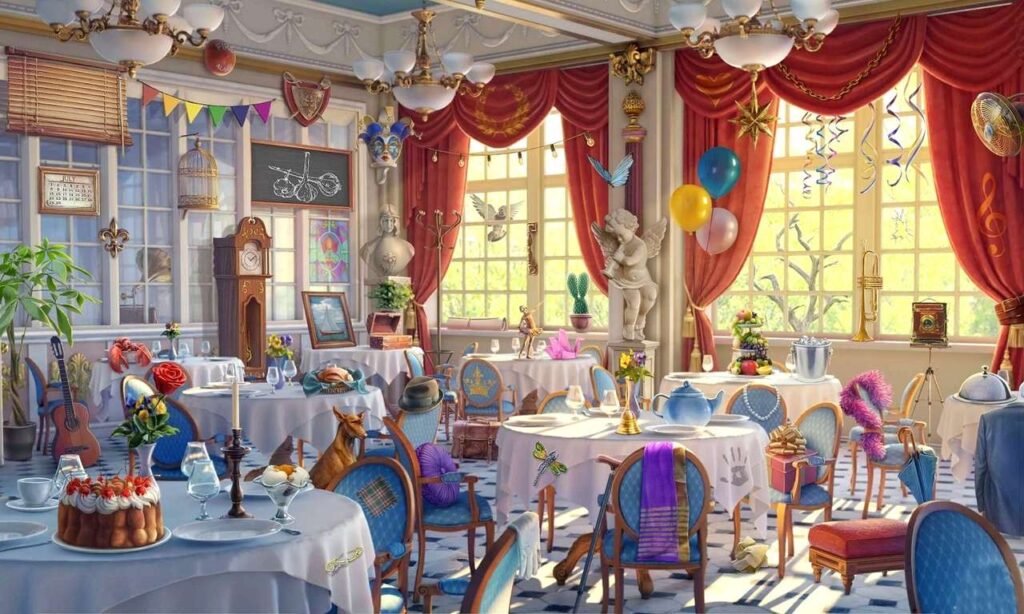
Puzzle people can’t turn it off, and honestly, why would we? The same brain that hunts a spangram before breakfast starts noticing patterns everywhere: in crosswalk timing, in playlist orders, and, once you see it, in restaurant dining rooms. Because here’s the delightful secret hiding in plain sight: a great dining room is a solved puzzle, and a bad one is a grid with three words forced in wrong.
Once you know the rules, you can walk into any restaurant and read the solve the way you’d read a completed grid. The pieces are restaurant furniture, the constraints are walls, aisles, and human comfort, and the elegance of the solve is something you can literally feel from the doorway. Let’s train the eye.
Every Room Is a Constraint Puzzle
Start with what the solver was given. A fixed floor plate. Doors that must stay reachable, windows worth featuring, a kitchen entrance that servers will cross four hundred times a night. Then the fill: tables and chairs of various sizes, each demanding clearance, each wanting a sightline, all needing to sum to enough seats to pay the rent.
That’s a classic constraint satisfaction problem, the same species as sudoku and seating charts at weddings. And exactly like puzzles, there are solves that merely work and solves that sing.
Spotting the Theme
Every well-designed room has what puzzle folks would call a theme: one organizing idea that every piece serves. Maybe it’s “farmhouse warmth,” carried through wood tables, cross-back chairs, and a long communal centerpiece. Maybe it’s “deco glamour,” all curved booths and brass edges.
The theme test is the same one we apply to a good grid: does every entry belong? One office chair in a bistro, one glass table in a tavern, and the whole theme wobbles. You feel it before you can name it, the way a weak themer sticks out mid-solve. Rooms with disciplined themes read as intentional, and intentional is what guests actually mean when they say a place has “a vibe.”
The Fill Quality Problem
Puzzle constructors obsess over fill, the ordinary entries between the marquee answers, because junk fill ruins a grid no matter how clever the theme. Dining rooms have fill too: the standard four-tops in the middle, the deuces along the rail, the workhorse chairs that are nobody’s photo subject.
- Clean fill: matched, sturdy seating that supports the theme without shouting.
- Junk fill: the wobbling table shimmed with napkins, the mismatched “temporary” chair entering year three.
- Elegant fill: pieces that quietly do double duty, tables that combine for parties, chairs that stack for events.
The fill is where you diagnose an owner’s discipline. Anyone can buy one showpiece booth. The rooms that feel effortless got the boring middle of the grid right, in commercial-grade pieces that hold up to daily solving.
Crossings and Flow
Here’s my favorite part of the room-puzzle: the crossings. Servers carrying trays, guests finding restrooms, the host walking a party of six: every route crosses the furniture grid, and the layout either resolves those crossings or jams them.
Watch the pattern on a busy night and you can grade the solve instantly. Good rooms flow like a finished grid reads, every path available, no dead ends. Bad rooms produce those four-way standoffs between a tray, a stroller, and two guests pointing at the same aisle. That’s not bad luck. That’s an unsolved crossing, purchased and installed.
The Reveal Moment
Every good puzzle has a reveal, that moment when the theme clicks and the whole grid reorganizes in your head. Dining rooms deliver it too, if they’ve earned it. You sit down and the seat holds you just right, the table is firm under your elbows, the room’s noise sits at conversational level, and something clicks: everything here was picked.
That click is the hospitality equivalent of finishing the last square. The guests don’t analyze it, they just rebook, the same way we return to the same puzzle page each morning. The reveal had been designed by someone who solved the room before we got there, ran it with a full house, then adjusted the grid till it worked for strangers.
Tomorrow’s Grid Is Already Set
So here is your new solving habit, free with today’s answers. Next restaurant visit, read the room before the menu: find the theme, grade the fill, trace the crossings, wait for the reveal. Two minutes of non-stop entertainment, and you will never unsee it.
And think of the constructors of these puzzles, the proprietors who fill their grids one furniture order at a time. The great ones follow the same rule the great puzzle makers do: respect the solver. Every guest who comes through the door is about to dwell in the completed grid, and the best rooms, like the best riddles, make it seem as if it were never difficult at all. One last hint before tomorrow’s grid, solver to solver: the restaurants worth returning to are the ones that would survive being printed as a puzzle, every piece earning its square, no forced fills, and a theme you can name by the second course.