A fireplace is much more than a source of warmth—it often becomes the architectural centerpiece of an entire room. Whether you’re designing a luxury residence, renovating a boutique hotel, or building a custom home, selecting the right fireplace material is one of the most important decisions you’ll make.
Among all available materials, natural stone fireplaces continue to dominate premium interior design because they combine timeless beauty with exceptional durability.
But what type of stone should you choose? Is marble better than travertine? Does natural stone require a lot of maintenance? And how do professional fabricators create truly custom fireplaces?
This guide answers the most common questions homeowners, architects, and designers ask before investing in a custom stone fireplace.
Why Is Natural Stone Considered the Best Fireplace Material?
Unlike manufactured materials, every piece of natural stone is unique.
Each slab contains distinctive veining, mineral formations, and color variations created over millions of years. This makes every fireplace one of a kind.
Natural stone also offers several practical advantages:
- Exceptional heat resistance
- Long service life
- Timeless appearance
- Easy integration with luxury interiors
- Increased property value
- Custom fabrication possibilities
Unlike painted wood surrounds or artificial panels, natural stone ages beautifully rather than deteriorating.
Which Stone Is Best for a Fireplace?
The answer depends on your design style, budget, and intended atmosphere.
Marble
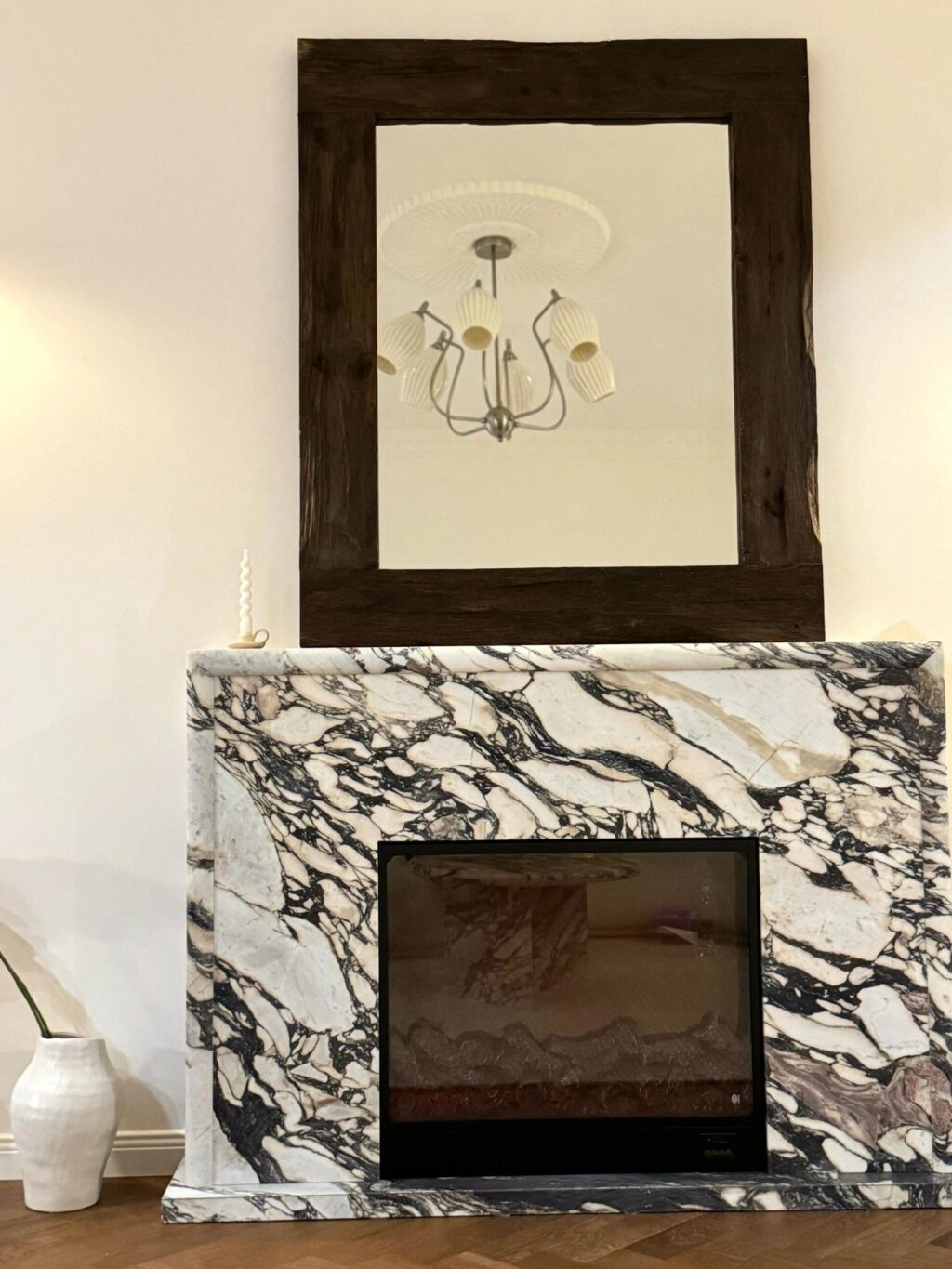
Marble remains the most popular choice for luxury interiors.
It offers:
- Elegant natural veining
- Sophisticated appearance
- Smooth polished surface
- Excellent compatibility with modern and classical architecture
Popular marble choices include:
- Calacatta Gold
- Arabescato
- Statuario
- Carrara
- Nero Marquina
Marble fireplaces often become statement pieces in living rooms and hotel lobbies.
Travertine
Travertine provides a warmer and softer appearance.
It works particularly well in:
- Mediterranean homes
- Modern organic interiors
- Scandinavian designs
- Contemporary villas
Its subtle texture creates a relaxed luxury that many designers prefer today.
Limestone
Limestone is known for its understated elegance.
Advantages include:
- Soft neutral colors
- Minimal visual noise
- Excellent for minimalist interiors
- Timeless appearance
Granite
Granite is one of the hardest natural stones available.
It offers:
- Outstanding durability
- Scratch resistance
- Heat resistance
- Low maintenance
Although less common in luxury residential interiors, granite performs exceptionally well in high-use commercial environments.
Is Marble Safe Around Fireplaces?
Yes.
This is one of the most frequently asked questions.
Marble has been used around fireplaces for centuries.
The fireplace surround itself generally experiences moderate temperatures rather than direct flame exposure. When installed correctly according to building regulations and manufacturer specifications, marble performs exceptionally well as a decorative surround. Modern residential fireplace installations also follow strict construction and safety standards.
Professional fabrication and installation are the keys to long-term performance.
Does Natural Stone Crack From Heat?
Under normal residential use, high-quality natural stone is extremely stable.
Problems usually occur because of:
- Poor installation
- Improper structural support
- Low-quality fabrication
- Rapid thermal shock
- Incorrect adhesive selection
Experienced stone manufacturers carefully engineer fireplace components to minimize stress and ensure long-term durability.
What Makes a Custom Fireplace Better Than a Standard Fireplace?
Mass-produced fireplaces often come in limited sizes and styles.
Custom stone fireplaces offer far greater flexibility.
Benefits include:
- Exact dimensions
- Personalized stone selection
- Custom edge profiles
- Integrated shelving
- Floating hearths
- Bookmatched marble patterns
- Bespoke architectural detailing
This allows architects to create fireplaces that perfectly complement the proportions of the room.
How Is a Marble Fireplace Manufactured?
Many homeowners imagine fireplaces are carved from a single block of stone.
Modern production is actually much more sophisticated.
A typical manufacturing process includes:
1. Stone Selection
Premium slabs are chosen according to:
- Color consistency
- Veining direction
- Structural integrity
- Client preference
2. Digital Drawing
Professional CAD software ensures precise dimensions before cutting begins.
3. CNC Cutting
Computer-controlled machinery produces accurate cuts with minimal waste.
4. Hand Finishing
Skilled craftsmen refine:
- Edges
- Corners
- Decorative profiles
- Surface details
5. Dry Assembly
Before shipment, the entire fireplace is assembled in the factory to verify:
- Joint alignment
- Dimensions
- Surface consistency
- Installation accuracy
6. Protective Packaging
Export-quality packaging minimizes transportation risks for international projects.
Can Stone Fireplaces Be Customized?
Absolutely.
Customization is one of the biggest advantages of working with a professional stone manufacturer.
Options include:
- Material selection
- Surface finish
- Mantel design
- Hearth dimensions
- Wall cladding integration
- Hidden lighting
- Modern floating styles
- Traditional carved mantels
Luxury residential projects increasingly require completely bespoke fireplace solutions rather than standard catalog products.
What Fireplace Style Is Most Popular in 2026?
Interior design trends continue to move toward cleaner architectural forms.
Current favorites include:
- Floor-to-ceiling stone fireplaces
- Large-format marble slabs
- Minimalist floating hearths
- Bookmatched marble feature walls
- Linear fireplaces
- Integrated TV and fireplace walls
- Warm travertine finishes
- Organic contemporary design
Rather than ornate decoration, today’s luxury interiors emphasize natural materials, proportion, and craftsmanship.
How Much Maintenance Does a Stone Fireplace Require?
Very little.
Routine maintenance usually includes:
- Dust removal with a microfiber cloth
- Cleaning using pH-neutral stone cleaners
- Periodic sealing for porous stones
- Avoiding acidic household chemicals
With proper care, a natural stone fireplace can remain beautiful for decades.
Why Do Designers Prefer Working With Stone Manufacturers Instead of Resellers?
Working directly with a manufacturer offers several advantages:
- Better material selection
- Custom fabrication
- Consistent quality control
- Faster communication
- Engineering support
- Worldwide project experience
- Flexible OEM and private-label production
This is particularly important for luxury residential developments, hotels, villas, and commercial projects where precision is essential.
Where Can You Find High-Quality Custom Stone Fireplaces?
Choosing an experienced manufacturer is just as important as selecting the stone itself.
Companies specializing in natural stone craftsmanship can produce fully customized fireplace surrounds, feature walls, mantels, and integrated architectural stonework tailored to each project.
For inspiration and bespoke solutions, explore natural stone fireplace collections from Inhere Stone, where premium marble, travertine, limestone, and other natural stones are crafted into custom fireplaces for luxury residential and commercial interiors.
👉 https://inherestone.com/fireplace/
Frequently Asked Questions
Are marble fireplaces still in style?
Yes. Marble fireplaces remain one of the most desirable architectural features in luxury homes because they combine timeless elegance with modern versatility.
Is travertine good for fireplaces?
Yes. Travertine is highly popular for warm contemporary interiors and provides a softer, more organic aesthetic than polished marble.
How long does a natural stone fireplace last?
With proper installation and routine maintenance, a natural stone fireplace can last for generations.
Can fireplaces be made to custom sizes?
Absolutely. Professional manufacturers can fabricate fireplaces according to architectural drawings, ensuring a perfect fit for each project.
What is the best finish for a marble fireplace?
Popular finishes include polished, honed, leathered, and brushed surfaces. The ideal choice depends on the desired interior style and maintenance preferences.
Final Thoughts
A fireplace is one of the few architectural elements that combines functionality, craftsmanship, and artistic expression. Choosing natural stone not only enhances visual appeal but also creates a lasting investment that can define a space for decades.
Whether you prefer the dramatic veining of marble, the warm texture of travertine, or the understated elegance of limestone, partnering with an experienced manufacturer ensures that your fireplace is tailored to your vision, built with precision, and designed to stand the test of time.