Walk into a modern factory, hospital, or construction site, and you’ll notice something that would have seemed unusual ten years ago: tablets on the shop floor, dashboards on the wall, sensors quietly reporting data in the background. Digital transformation stopped being a tech-industry buzzword a while ago. It’s now how manufacturers, healthcare providers, builders, retailers, banks, and even farmers get their work done.
For decades, these industries ran on paper records, spreadsheets, phone calls, and handshakes. Those methods worked — until they didn’t. They created delays, drove up costs, and made it hard to grow beyond a certain point.
The pressure to change comes from every direction. Customers want faster service. Employees expect better tools. Leaders need real-time information instead of last quarter’s numbers. Digital transformation is how businesses catch up to all three at once. And here’s the part that often gets missed: it isn’t about replacing people. Done well, it frees employees from repetitive busywork so they can spend their time solving problems, serving customers, and actually growing the business.
What Is Digital Transformation, Really?
At its simplest, digital transformation means using technology to change how a business operates and delivers value — not just bolting new software onto old habits.
In practice, that might look like cloud-based platforms replacing filing cabinets, AI handling demand forecasting, CRM systems tracking every customer conversation, or IoT sensors feeding live data into a dashboard. The specific tools vary by industry. What matters is that the business itself works differently afterward.
That distinction — changing the process versus digitizing the old one — is where most companies succeed or fail.
“Digital transformation delivers the greatest value when businesses rethink their processes instead of simply digitizing old workflows. Technology should remove friction, not recreate it in a digital format,” says Chongwei Chen, President & CEO at DataNumen.
Manufacturing Is Getting Smarter
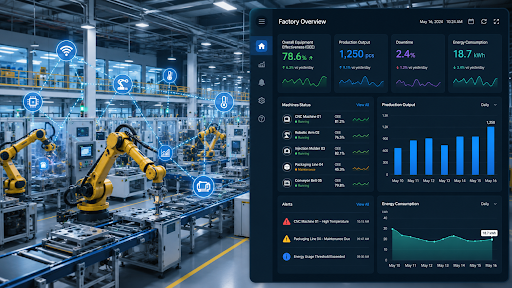
Few industries have changed as dramatically as manufacturing over the past decade. Connected machines now monitor their own performance around the clock. Instead of waiting for equipment to break down mid-shift, maintenance teams get early warnings and fix problems before they become expensive ones. Production managers watch output, inventory, and equipment efficiency from a single screen rather than walking the floor with a clipboard.
Some manufacturers have gone a step further, pairing AI with their production data to forecast demand. The result is less waste on one end and fewer stockouts on the other — a balance that used to depend largely on experienced guesswork.
The payoff shows up in reduced downtime, better product quality, lower maintenance costs, and production decisions made in minutes instead of days.
Healthcare Is Finally Leaving Paper Behind
Anyone who has watched a receptionist dig through paper files understands why healthcare needed this shift.
Electronic health records now give physicians a patient’s full medical history in seconds. Online booking has replaced phone tag for appointments. Telemedicine means a follow-up consultation no longer requires a trip to the clinic — something patients in rural areas especially appreciate. Behind the scenes, AI-powered diagnostic tools help doctors spot patterns that are easy to miss, and hospitals use analytics to plan staffing, manage patient flow, and cut waiting times. The technology serves two goals at once: better patient outcomes and a less chaotic back office.
Retail Runs on Data Now
Retailers stopped depending on foot traffic alone years ago. Today, the physical store, the website, the mobile app, and the loyalty program all feed into one connected customer journey.
Instead of guessing what shoppers want, retailers study actual purchasing behavior and use it to personalize recommendations and marketing. Inventory management has improved just as much — modern systems track stock in real time, forecast demand, and reorder products before shelves go empty. Less capital tied up in excess inventory, fewer disappointed customers staring at empty racks.
Construction Is Trading Clipboards for Cloud Platforms
Construction earned its reputation as a paper-heavy industry honestly. Change orders, safety reports, inspection logs — all of it lived in binders and fax machines.
That’s changing fast. Project managers now track budgets, schedules, equipment, and crews through cloud platforms updated in real time. Field teams upload progress photos and safety reports straight from their phones. Drones handle aerial site inspections that once required scaffolding or expensive equipment — and put fewer people at risk in the process.
Building Information Modeling (BIM) may be the biggest shift of all. Architects, engineers, and contractors now collaborate on shared digital models before ground is ever broken, catching design conflicts on a screen instead of on site, where they cost real money to fix.
Financial Services Set the Pace
Banking is where most people first experienced digital transformation firsthand, even if they never called it that.
Customers now open accounts online, move money instantly, get fraud alerts within seconds, and apply for loans without visiting a branch. What’s less visible is everything happening behind the scenes: AI flagging suspicious transactions, automated compliance checks, and risk analysis that once took teams of analysts weeks to complete.
The routine administrative work hasn’t disappeared — it’s just been handed to software, which leaves financial professionals more time for the relationship and strategy work that actually needs a human.
Even Farming Has Gone High-Tech
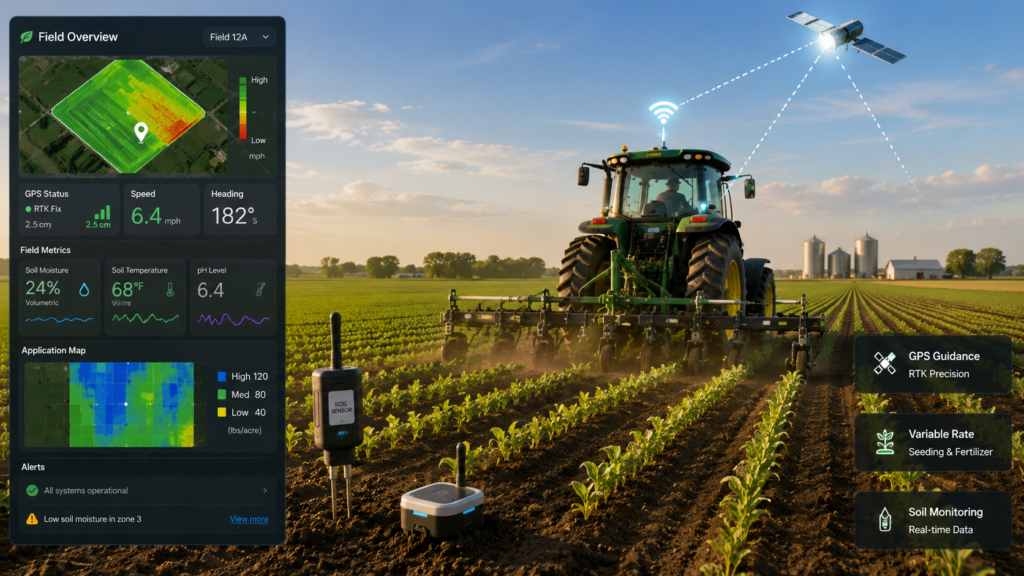
Agriculture looks traditional from the outside, but a modern farm generates more data than most offices.
GPS-guided equipment plants and harvests with remarkable precision. Soil sensors tell farmers exactly where fertilizer is needed instead of treating every acre the same. Satellite imagery, weather forecasting tools, and automated irrigation round out the picture.
The results are practical, not futuristic: less water wasted, lower input costs, better yields, and faster responses when the weather turns.
Logistics Moves Faster With Fewer Surprises
Logistics has always been a planning game, and better information wins it.
Companies now track shipments across the entire supply chain. Fleet management systems monitor vehicle locations, fuel usage, and driver performance. AI reworks delivery routes on the fly based on traffic and demand, while warehouse automation speeds up fulfillment and cuts picking errors.
Customers see the difference directly — faster deliveries, accurate tracking, and far fewer “where is my order?” phone calls.
“Businesses gain a competitive advantage when operational data becomes visible across every department. Real-time insights allow leaders to solve problems before customers ever notice them,” says Sharon Amos, Director at Air Ambulance 1.
Better Data, Better Decisions
There’s a common thread running through every industry above: access to reliable, current data.
Traditional reporting meant waiting for monthly or quarterly summaries — a rearview mirror. Modern dashboards update continuously, letting leaders watch sales performance, customer behavior, inventory, operating costs, and financial health as they happen.
That shift changes how companies behave. Instead of reacting to problems after customers feel them, organizations spot trends early and act while it still counts.
Customers Won’t Wait Anymore
There’s a reason all of this feels urgent. People book flights, order dinner, and resolve support issues in minutes from their phones — and they carry those expectations into every interaction with every business.
A company that still requires a phone call during office hours to schedule an appointment isn’t competing against its direct rivals anymore. It’s competing against the smoothest digital experience its customer had that week.
Self-service portals, online scheduling, automated notifications, personalized recommendations — these aren’t luxuries. They raise customer satisfaction and shrink administrative workloads at the same time, which is why they tend to pay for themselves.
The Honest Part: This Is Hard
Plenty of digital transformation projects fail, and it’s rarely the technology’s fault.
The most common mistake is leading with tools instead of strategy — buying software first and figuring out the problem later. Add legacy systems that resist replacement, employees skeptical of change, skills gaps, cybersecurity worries, and tight budgets, and it’s easy to see why so many initiatives stall.
The organizations that succeed tend to move gradually. They pick projects that solve a real, measurable business problem, prove the value, and build from there. And they take training seriously — new software creates exactly zero value if nobody knows how to use it well.
Security Can’t Be an Afterthought
Every new connection is also a new door, and cybercriminals keep checking whether it’s locked.
Businesses now hold enormous amounts of sensitive customer and operational data, which makes them targets for phishing, ransomware, and data breaches.
“Multi-factor authentication, regular software updates, employee security training, encryption, and continuous monitoring aren’t optional extras; they belong in the transformation budget from day one,” Says Tal Holtzer, CEO of VPSServer.
A digital strategy without a security strategy is just risk with a better interface.
People Still Decide Whether It Works
For all the talk of automation and AI, including tools such as claude desktop, transformation still succeeds or fails on the human side.. Technology handles the repetitive work. Judgment, creativity, communication, and relationships still belong to people — and they always will. Companies that invest in developing their employees consistently outperform those that simply hand out new software, because confident users get far more out of any tool.
Leadership matters here too. When leaders clearly explain why changes are happening and how they benefit both staff and customers, resistance fades. When they don’t, even the best technology gathers dust.
“The businesses seeing the strongest results from digital transformation are those that empower their people alongside their technology. Digital tools work best when employees understand how to use them to deliver better outcomes,” says Sean Cope, Owner at EquipXR.
What Comes Next
The pace isn’t slowing down. AI, predictive analytics, connected devices, and cloud computing will only weave themselves deeper into everyday operations over the next few years.
The companies that treat transformation as continuous improvement — not a one-time project with an end date — will adapt fastest to shifting customer expectations, economic conditions, and competition. The ones that keep delaying will find themselves competing against rivals who decide faster, operate leaner, and serve customers better.
Digital transformation isn’t really about technology in the end. It’s about building a business resilient enough, responsive enough, and competitive enough for whatever comes next — and giving your people the tools to work smarter instead of just harder.