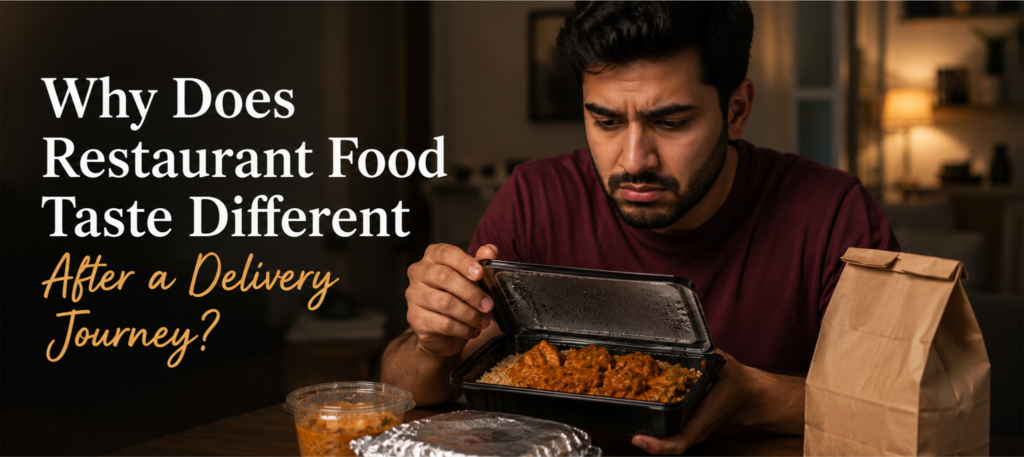
Ordering food online has become part of everyday life. Whether it’s a freshly baked pizza, gourmet burger, pasta, or Asian cuisine, customers expect restaurant-quality meals to arrive at their doorstep. Yet many people notice that the same dish tastes slightly different when eaten at home compared to enjoying it inside the restaurant.
This difference isn’t simply a matter of opinion. Food scientists, chefs, and packaging specialists agree that several physical and chemical changes begin the moment food leaves the kitchen. Temperature fluctuations, moisture movement, oxidation, transportation, and even human psychology all influence how customers experience delivered meals.
Understanding these factors helps restaurants improve food quality during delivery while giving customers realistic expectations about why freshly served meals and delivered meals can never be completely identical.
Taste Begins to Change the Moment Food Leaves the Kitchen
A meal served immediately after cooking is at its peak condition. Proteins are properly heated, sauces have the ideal consistency, fried foods remain crisp, and aromas are strongest.
Once food is packed for delivery, several natural processes begin:
- Heat gradually escapes.
- Steam becomes trapped inside the package.
- Moisture redistributes throughout the food.
- Crispy coatings begin absorbing water.
- Fats slowly cool and solidify.
- Delicate herbs and fresh garnishes lose their brightness.
These changes happen regardless of how carefully the meal is prepared. The goal is not to eliminate them completely but to slow them enough that customers still enjoy a high-quality dining experience.
Aroma Has a Bigger Impact Than Most People Realize
Scientists estimate that much of what we describe as “taste” actually comes from smell. When food is served directly in a restaurant, warm aromas immediately reach the nose, enhancing flavor perception.
During delivery, those aromatic compounds become trapped inside the packaging. By the time customers open the container, some of the most volatile aroma molecules have already dispersed or weakened.
This is one reason why freshly baked pizza or grilled steak often seems more flavorful when eaten immediately after cooking.
Restaurant chefs understand that aroma is part of the dining experience, which is why freshly prepared dishes are usually served without unnecessary delays.
Steam Can Transform Food Texture
Moisture is one of the biggest challenges in food delivery.
Hot meals continue releasing steam after they are packed. If that steam cannot escape, it condenses into tiny water droplets that eventually settle back onto the food.
This process affects many popular menu items:
- French fries lose crispness.
- Fried chicken coatings soften.
- Pizza crust absorbs moisture.
- Toasted bread becomes chewy.
- Roasted vegetables lose surface texture.
Texture strongly influences flavor perception. Even if ingredients remain identical, softer textures often make food seem less satisfying.
Temperature Changes Affect Flavor Perception
Different foods are designed to be enjoyed within specific temperature ranges.
For example:
- Melted cheese changes texture as it cools.
- Butter-based sauces begin to thicken.
- Chocolate hardens.
- Soups lose aromatic intensity.
- Grilled meats become firmer.
Human taste receptors also respond differently depending on temperature. Warm foods generally release flavors more effectively than foods that have cooled significantly.
Restaurants carefully select serving temperatures because they directly influence customer satisfaction.
Packaging Plays a Major Role
The type of packaging used during transportation has a significant impact on food quality.
Properly designed custom pizza boxes wholesale options help restaurants maintain product integrity by balancing insulation with airflow. A well-constructed box protects the pizza from physical damage while allowing enough ventilation to reduce excessive moisture buildup, helping preserve crust texture throughout delivery.
Packaging should never be viewed as merely a transport container. It becomes part of the cooking process once the food leaves the kitchen, influencing heat retention, condensation, and overall presentation.
Restaurants often test different packaging materials before choosing solutions that best suit their menu.
Transportation Creates Constant Movement
Unlike meals served at a restaurant table, delivered food experiences continuous movement.
Throughout the journey, food may encounter:
- Vehicle vibrations
- Sudden braking
- Sharp turns
- Uneven road surfaces
- Temporary stacking
These movements can shift toppings, mix sauces, flatten delicate ingredients, or disturb carefully arranged meals.
Packaging inserts, secure closures, and proper compartment design help reduce these effects while keeping meals visually appealing.
Ingredients Continue Changing After Cooking
Cooking does not completely stop once food leaves the oven or grill.
Residual heat continues affecting ingredients for several minutes.
For pizza, this means:
- Cheese continues melting.
- Steam keeps rising from the crust.
- Oils redistribute across the surface.
- Tomato sauce gradually thickens.
Similarly, roasted meats continue carrying internal heat, while baked goods slowly release moisture into surrounding air.
Understanding these post-cooking changes allows chefs to slightly adjust preparation methods for delivery orders compared to dine-in service.
Different Pizza Styles React Differently During Delivery
Not every pizza behaves the same after leaving the oven.
Thin-crust pizzas lose heat quickly because they contain less mass. Thick-crust varieties retain warmth longer but may also trap more internal moisture.
Restaurants offering specialty styles often use custom detroit pizza boxes designed to accommodate the deeper shape and thicker crust associated with Detroit-style pizza. Properly fitted packaging helps maintain structure during transportation while reducing unnecessary movement inside the box.
Matching packaging to the specific product improves both appearance and customer satisfaction upon delivery.
Moisture Content Influences Overall Quality
Foods with higher water content naturally produce more steam during transport.
Examples include:
- Mushrooms
- Tomatoes
- Spinach
- Pineapple
- Fresh mozzarella
- Cooked vegetables
As these ingredients release moisture, surrounding components absorb it.
This explains why pizzas with vegetable-heavy toppings often soften more quickly than those topped mainly with cured meats or drier ingredients.
Many restaurants partially cook certain vegetables beforehand to reduce excess moisture before baking.
Psychology Influences How Food Tastes
The dining environment affects flavor perception more than many people realize.
Inside a restaurant, customers enjoy:
- Freshly prepared aromas
- Attractive plating
- Comfortable lighting
- Background music
- Immediate service
- Social interaction
At home, distractions such as television, work, or delivery delays may alter the eating experience.
Research in sensory psychology suggests that expectations, surroundings, and presentation all influence how people evaluate flavor.
In other words, taste is shaped not only by ingredients but also by the environment in which food is consumed.
Timing Is One of the Biggest Factors
Delivery time directly affects food quality.
Every additional minute allows:
- More heat to escape.
- More steam to accumulate.
- More texture changes to occur.
- More aromas to fade.
Restaurants reduce these effects by:
- Coordinating kitchen operations.
- Preparing food close to pickup time.
- Optimizing delivery routes.
- Using insulated transport bags.
- Training drivers in careful handling.
Efficient logistics often improve customer satisfaction just as much as better recipes.
Restaurant Menus Are Evolving for Delivery
Many restaurants now design specific menu items that travel well.
Instead of offering every dine-in dish for delivery, they may modify recipes by:
- Choosing sturdier ingredients.
- Separating sauces.
- Using thicker coatings.
- Reducing moisture-heavy toppings.
- Adjusting cooking times slightly.
These changes help maintain better quality without significantly altering the original flavor profile.
Delivery-friendly menu engineering has become an important strategy for restaurants competing in today’s growing online food market.
Small Packaging Improvements Make a Big Difference
Restaurants continually refine packaging based on customer feedback and food performance.
Common improvements include:
- Better ventilation
- Stronger structural support
- Grease-resistant materials
- Divider inserts
- Secure closures
- Correct box sizing
Although customers often focus on the food itself, packaging quietly contributes to preserving freshness, presentation, and overall enjoyment throughout the journey.
Final Thoughts
Restaurant food tastes different after delivery because it continues changing from the moment it leaves the kitchen. Heat loss, trapped steam, aroma reduction, moisture movement, transportation, and human psychology all influence the final eating experience.
While these changes cannot be completely prevented, restaurants can significantly reduce their impact through thoughtful recipe development, efficient delivery systems, and carefully designed packaging. Likewise, customers who enjoy their meals soon after arrival are more likely to experience flavors and textures closer to those intended by the chef.
As food delivery continues to grow, understanding the science behind these changes helps both restaurants and customers appreciate the complex journey every meal takes before reaching the table.