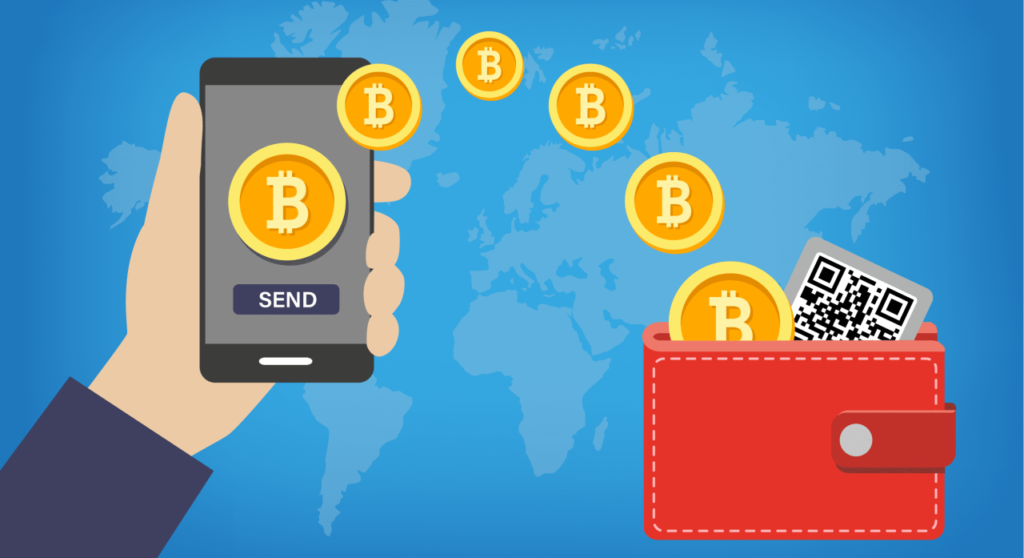
Crypto has evolved from a niche interest into a tool millions of people use for investing, payments, and online services. Industry estimates suggest that global crypto ownership now exceeds 560 million users, reflecting how quickly digital assets have entered the mainstream.
For beginners, terms like wallets, blockchains, and private keys can feel overwhelming at first. This guide breaks down the essentials so you can understand how digital wallets work and get comfortable with the basics of cryptocurrency.
What is a digital wallet?
A digital wallet is software or hardware that gives you access to your cryptocurrency holdings. It stores the credentials needed to manage assets on a blockchain network and lets you send, receive, and monitor your balances.
Think of it as the crypto version of a banking app. Your money isn’t physically inside your banking app, and your Bitcoin or Ethereum isn’t sitting inside your wallet either. The wallet simply provides access to assets that exist on the blockchain.
People use digital wallets for a wide range of activities. Some buy and hold crypto as an investment, while others use wallets for remittances, decentralized finance, NFT collecting, or blockchain gaming. Common uses range from online purchases to sites where you can play Ethereum blackjack casino games.
Modern wallets are designed with beginners in mind. Most have clean interfaces, support multiple cryptocurrencies, and can be installed in just a few minutes.
Public keys, private keys, and recovery phrases
Every crypto wallet relies on a pair of cryptographic keys. The public key creates a wallet address that can be shared with other people. If someone wants to send you cryptocurrency, this is the information you’ll provide. Ethereum addresses, for example, usually start with “0x” and contain a long string of letters and numbers.
The private key is different. It grants access to the assets connected to your wallet and should never be shared with anyone. Losing control of a private key means losing control of the funds attached to it.
Most wallets simplify the process by generating a recovery phrase, often called a seed phrase. This consists of 12 to 24 randomly generated words that act as a backup.
If your phone breaks, your laptop stops working, or you switch devices, the recovery phrase allows you to restore access. That’s why many users write it down and store it somewhere secure rather than saving it in cloud storage or keeping screenshots on their phones.
The crypto community has been basically saying that it’s ‘not your keys, not your coins’. It serves as a reminder that ownership ultimately comes down to who controls access.
Hot wallets and cold wallets
Wallets generally fall into two categories: hot wallets and cold wallets. Hot wallets connect to the internet, and mobile apps, browser extensions, desktop wallets, and exchange accounts all fit into this category. MetaMask, Coinbase Wallet, and Trust Wallet are among the most widely used examples.
Convenience is the biggest advantage. Hot wallets make it easy to trade, transfer assets, and connect with decentralized applications. Someone experimenting with crypto for the first time will probably find a hot wallet to be the easiest entry point.
Internet connectivity also creates more opportunities for scammers. Fake websites, phishing emails, malicious browser extensions, and social engineering attacks remain common across the industry.
Cold wallets keep private keys offline for most of their lifespan. They are like a flash card with better security where you store your coins. Hardware devices from companies such as Ledger and Trezor are the most recognizable examples.
Long-term investors often prefer cold storage because it significantly reduces exposure to online threats. A common strategy is to keep smaller amounts in a hot wallet for day-to-day activity while moving larger holdings into offline storage.
Custodial and non-custodial wallets
Another distinction worth understanding is who controls the wallet. Custodial wallets are managed by third parties, usually cryptocurrency exchanges. Platforms such as Binance, Coinbase, and Kraken hold the private keys on behalf of users.
For beginners, that setup feels familiar because it works similarly to online banking. Password recovery is straightforward, customer support exists, and users don’t have to worry about safeguarding cryptographic credentials themselves.
The tradeoff is that assets remain under the control of the provider. Events like the collapse of FTX in 2022 pushed many investors to learn more about self-custody and asset ownership.
Non-custodial wallets give users complete control over their private keys and recovery phrases. Many people prefer this approach because it aligns with the decentralized philosophy that helped make cryptocurrency popular in the first place.
Cryptocurrency at it’s core
Cryptocurrency is a digital asset secured through cryptography and maintained by decentralized networks of computers. Bitcoin launched in 2009 and introduced a system where users could exchange value directly without depending on banks or payment providers to approve transactions. It remains the largest cryptocurrency today and has a maximum supply capped at 21 million coins.
Ethereum arrived in 2015 and expanded the idea beyond payments. Developers could now build applications directly on the blockchain using smart contracts. That innovation helped fuel decentralized finance, NFT marketplaces, and blockchain gaming ecosystems.
Other cryptocurrencies have focused on specific strengths. Solana emphasizes speed and lower transaction costs. XRP concentrates on payment infrastructure. Avalanche and Cardano have built ecosystems aimed at supporting decentralized applications. There are now thousands of cryptocurrencies in existence, although only a relatively small number attract significant user activity and developer support.
Blockchain significance
Blockchain technology acts as a shared ledger distributed across thousands of computers around the world. When transactions happen, participants validate them according to the network’s rules. Once approved, they are grouped into blocks and permanently recorded. Every new block connects to the previous one, creating a transparent history of transactions.
This structure reduces reliance on intermediaries and makes records difficult to alter after they’ve been confirmed. Blockchain development has evolved rapidly over the last few years. For example, Ethereum’s transition to proof-of-stake in 2022 cut its energy consumption by more than 99%, addressing one of the biggest criticisms aimed at earlier blockchain systems.
Companies explore blockchain for use in different industries. Finance, supply chain tracking, digital identity systems, ticket verification, and intellectual property management are just a few areas receiving attention. And the more people explore blockchain, the more use it gains in different areas.